On February 6, Guangxi University convened a press conference to announce a major scientific breakthrough achieved by the team led by Professor Zhang Jisen from the School of Agriculture, the Guangxi Laboratory for Sugarcane Biology and Breeding, and the State Key Laboratory for Conservation and Utilization of Subtropical Agro-bioresources. The breakthrough centers on the construction of an ultra-complex polyploid graph pangenome for sugarcane and the identification of key breeding genes.
The related research article, titled “Multiscale pangenome graphs empower the genomic dissection of mixed-ploidy sugarcane species,” has been published online in the internationally renowned journal Science.
Academician Han Bin of the Chinese Academy of Sciences and Director of the CAS Center for Excellence in Molecular Plant Sciences attended the conference and delivered remarks on the significance of the study. Professor Xiao Jianzhuang, Deputy Party Secretary and President of Guangxi University, delivered a welcome address. A project officer from the China Rural Technology Development Center of the Ministry of Agriculture and Rural Affairs spoke at the event. Zhang Yuebin, Chief Scientist of the National Sugar Crop Industry Technology System and Vice President of the Yunnan Academy of Agricultural Sciences, also attended and commented on the achievement. The conference was chaired by Feng Jiaxun, the former Vice President of Guangxi University.
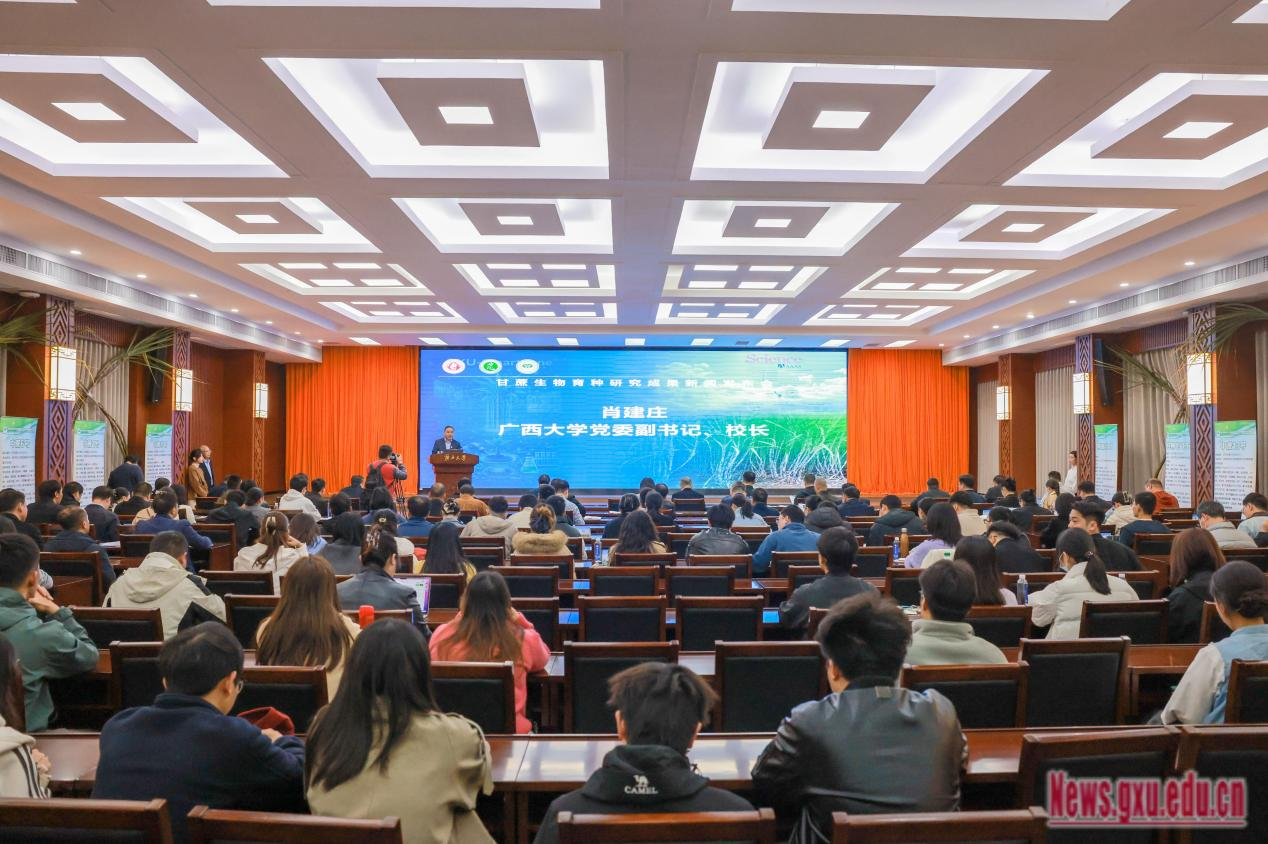
In his address, Xiao Jianzhuang emphasized that the university has remained committed to advancing sugarcane bio-breeding research in alignment with national strategic directives on the development of the sugar industry. He noted that the achievement represents the collective efforts and shared wisdom of the government, industry partners, universities, and collaborating institutions, highlighting the dual responsibility of universities in both fundamental research and industrial application. He further stated that Guangxi University will continue to deepen collaboration with domestic and international universities, research institutes, and leading enterprises, consolidate innovation resources, and strive for new breakthroughs in agricultural science and technology—contributing to national sugar security, the upgrading of Guangxi’s sugar industry, and rural revitalization.
Han Bin highly praised the study, noting that it not only successfully constructed a sugarcane graph pangenome and identified key breeding genes, but also established a novel technical framework for polyploid crop genomics. He described the work as a milestone with broad implications for genetic improvement research in crops such as maize and cotton.
The representative from the China Rural Technology Development Center remarked that the research exemplifies the power of organized, collaborative innovation among universities and research institutes. The Center will continue to support research projects that address industrial needs and expressed hope that the team will further promote industry–academia–research integration to accelerate the translation of scientific achievements into practical applications serving agricultural modernization and rural industrial revitalization.
Zhang Yuebin affirmed the industrial value of the achievement, stating that the study marks a transition in sugarcane breeding from “experience-driven” to “gene-driven” approaches. With the integration of large-scale bio-breeding models, the breeding cycle for new varieties can be substantially shortened, significantly enhancing yield and quality and strengthening China’s competitiveness in the global sugar industry.
At the conference, Zhang Jisen provided a detailed interpretation of the paper’s major innovations, recent progress in new sugarcane variety development, and the research and application of the university’s large-scale intelligent breeding model. He also answered questions from the media.
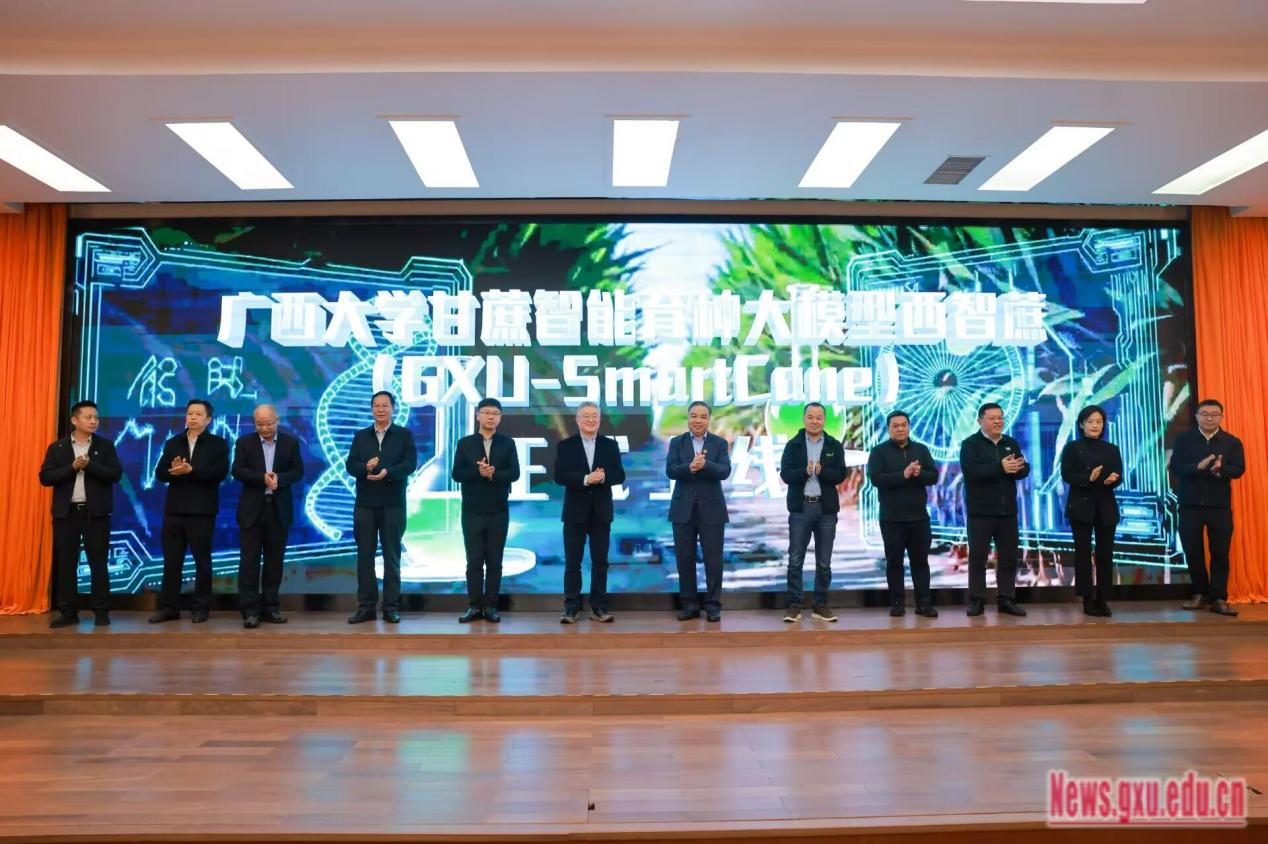
During the event, guests jointly launched the university’s independently developed intelligent sugarcane breeding model, “GXU-SmartCane,” which will provide digital support for breeding innovation.
Media outlets including Xinhua News Agency, Guangming Daily, China News Service, Science and Technology Daily, China Education Daily, Guangxi Television, and Guangxi Daily attended the press conference and widely reported on the research achievement.

 Home
>
News & Events
>
Events
Home
>
News & Events
>
Events


