A delegation from the Faculty of Agriculture at Chiang Mai University and Maejo University, Thailand, recently visited the School of Agriculture of Guangxi University for an in-depth exchange centered on academic discussion, field research, and discussions on cooperation. This international engagement not only strengthened inter-university collaboration but also, leveraging Guangxi University's established expertise in ASEAN agricultural cooperation, identified new pathways for joint innovation in tropical and subtropical climate-smart agriculture.
The Thai delegation was led by President of Maejo University Prof. Weerapon Thongma and Prof. Durani Naphrom, Dean of the Faculty of Agriculture of Chiang Mai University. Through substantial discussion, both sides quickly reached a consensus to anchor their cooperation in "Climate-Smart Agriculture."
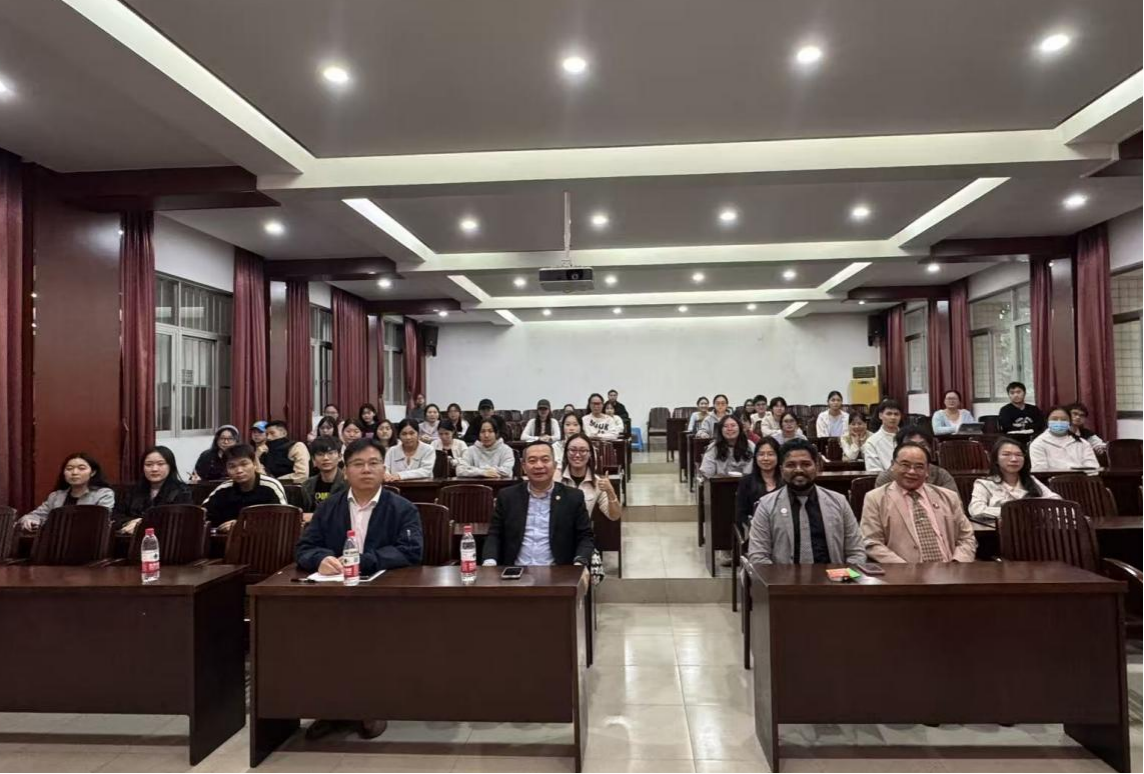
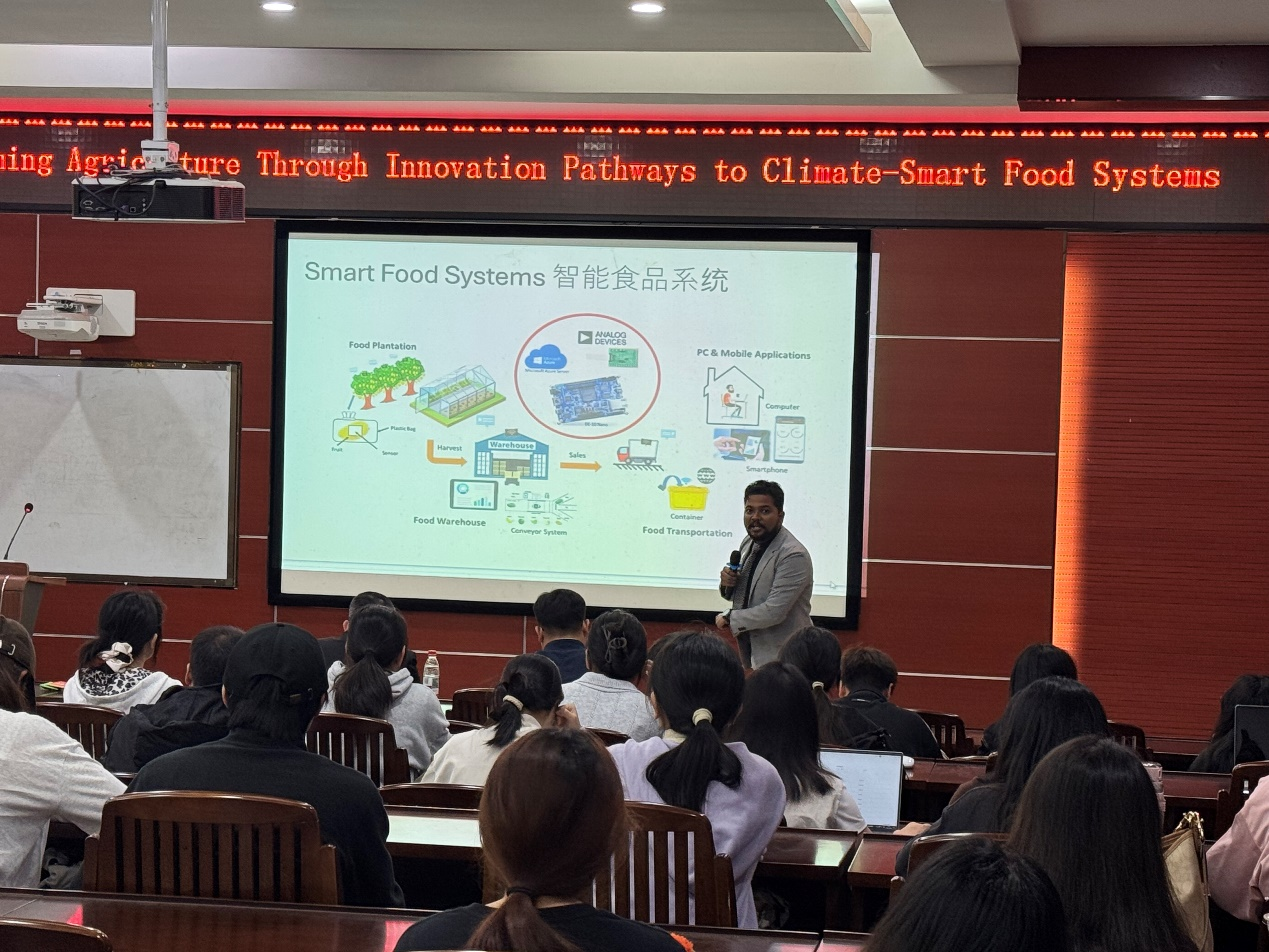
The academic exchange session, held in the school lecture hall, was packed with attendees. Dr. Prakash Murgeppa Bhuyar, Director of the Institute of Innovative Agricultural Research (IIAR), delivered a lecture titled "Transforming Agriculture Through Innovation: Pathways to Climate-Smart Food Systems," sharing practical cases of Southeast Asian smallholders applying technologies like water-saving cultivation and biochar soil amendment. Faculty and students from Guangxi University engaged in a lively Q&A session focusing on technology adaptability and regional application scenarios, translating the concept of "climate-smart agriculture" into actionable ideas.
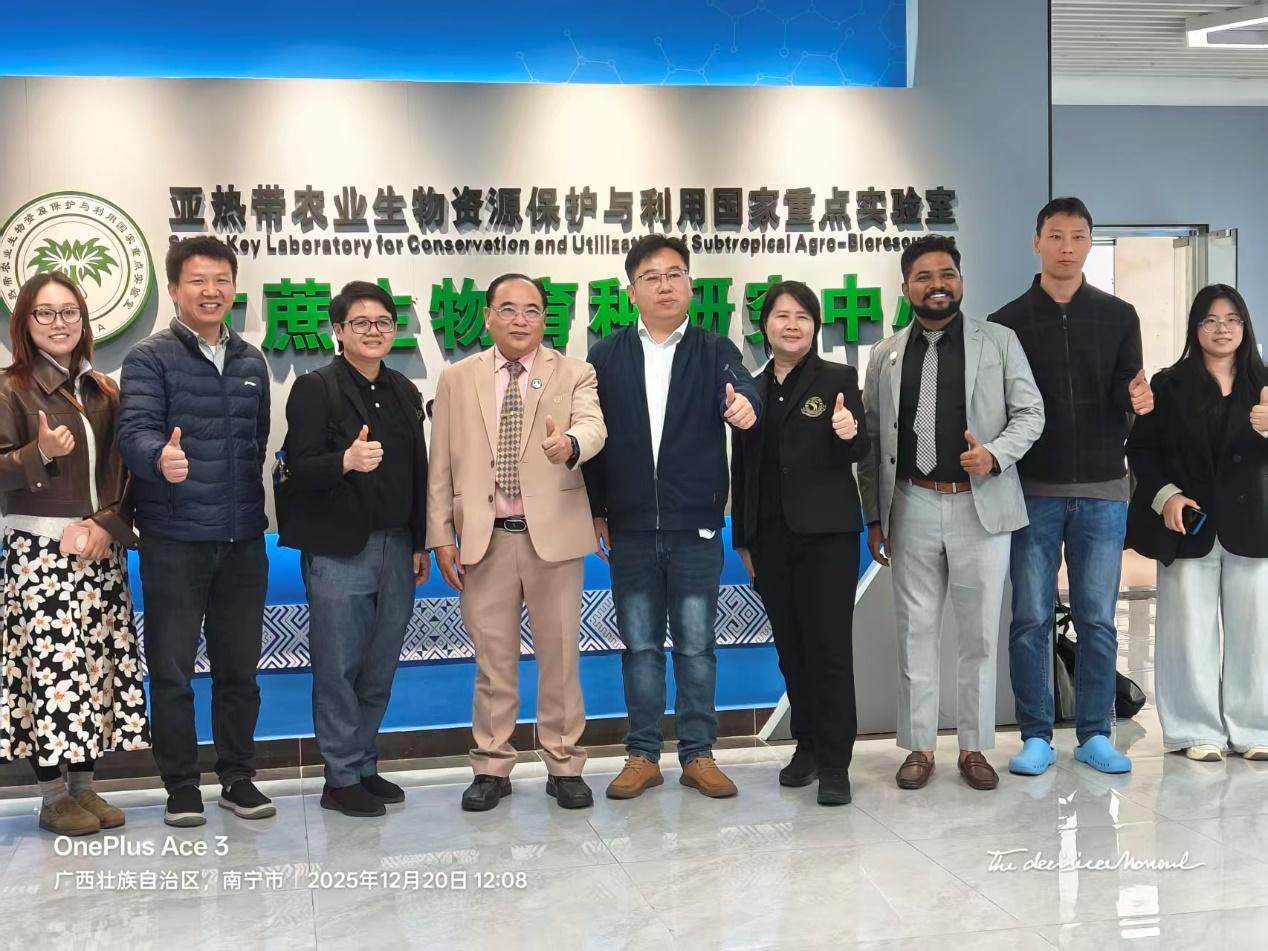
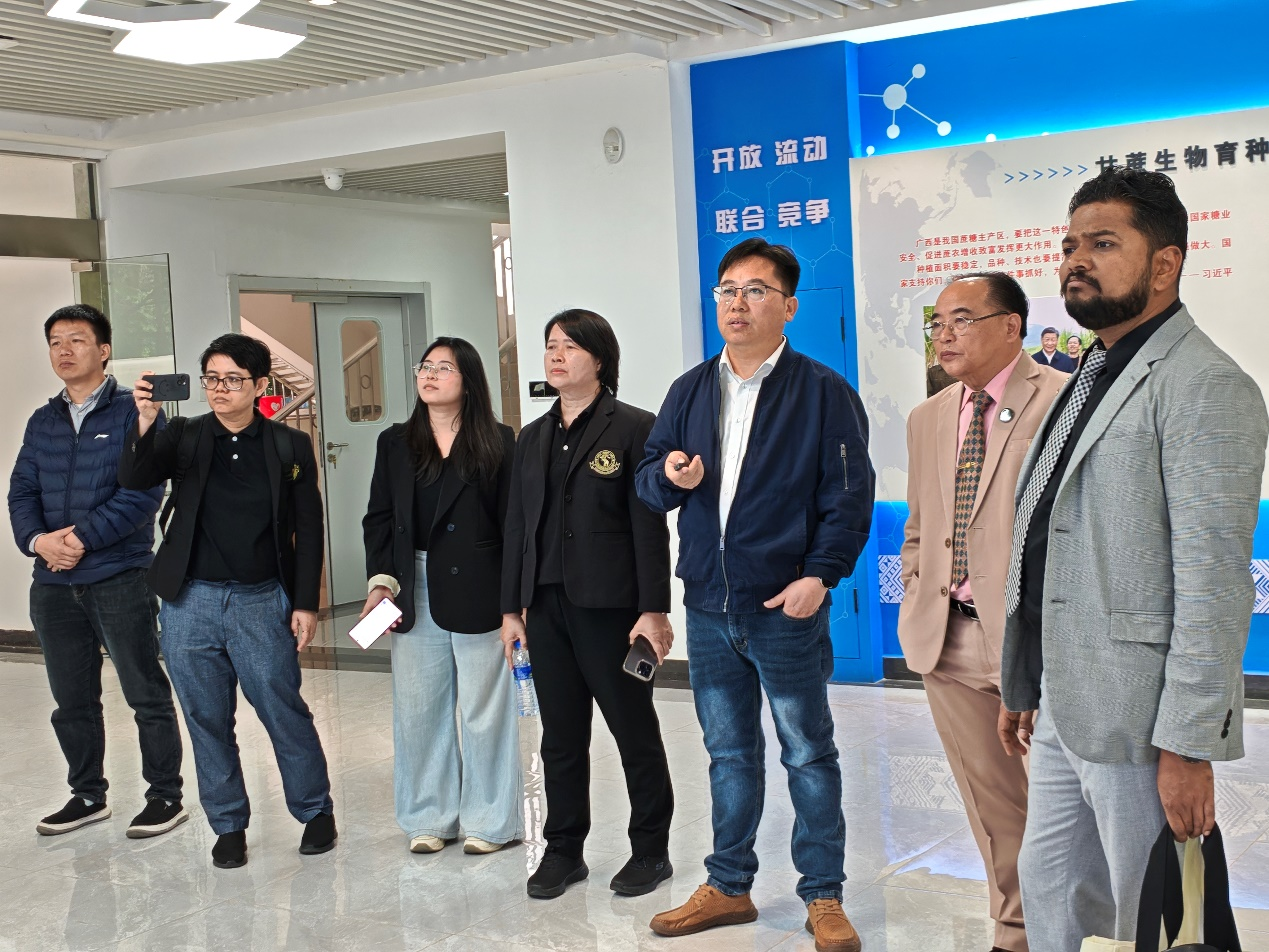
The delegation paid a visit to the Guangxi Key Laboratory of Sugarcane Biology and the Guangxi Sugarcane Bio-breeding Laboratory. From tissue culture seedling racks to gene-editing experimental platforms, the Thai scholars observed closely, took notes, and frequently paused to inquire about technical details or document their observations. This visit not only provided them with a firsthand look at the laboratories' cutting-edge work in sugarcane germplasm innovation and biotechnology application but also evolved into a point-to-point, in-depth technical dialogue. Both sides held enthusiastic discussions on key topics such as improving stress resistance in tropical crops and optimizing molecular breeding techniques, exchanging substantial research experience and paving a solid groundwork for subsequent collaboration.
Through discussion, a plan was finalized for a return visit by a delegation from the School of Agriculture, Guangxi University, in early 2026. The visit is expected to culminate in the signing of MOA, prioritizing collaboration in three main areas: jointly applying for regional agricultural research projects, establishing a "1+1" dual-supervisor training channel, and sharing course resources on tropical crops. Prof. Dr. Weerapon Thongma stated, "We hope this exchange will serve as a starting point to transition our cooperation from 'academic interaction' to 'tangible implementation.'"
This gathering of agricultural scholars from Guangxi and Thailand has not only built a bridge for face-to-face exchange but has also steered cooperation towards concrete projects. It demonstrates the leading role of the School of Agriculture of Guangxi University in promoting synergistic agricultural science and technology development within ASEAN, injecting collaborative momentum into regional innovation for climate-smart agriculture.

 Home
>
News & Events
>
News
Home
>
News & Events
>
News


