On June 11, Zhao Shuangliang, Vice President of Guangxi University (GXU), attended a video seminar hosted by the Nueva Ecija University of Science and Technology in the Philippines under the theme "SDA ASEAN Bridge: Promoting Coordinated Development of Trade, Research, Innovation, Digital Development, and Education 3.0," and delivered a speech on behalf of GXU and the SDA (SDA: Sustainable Development Alliance, hereinafter referred to as the “Alliance”).
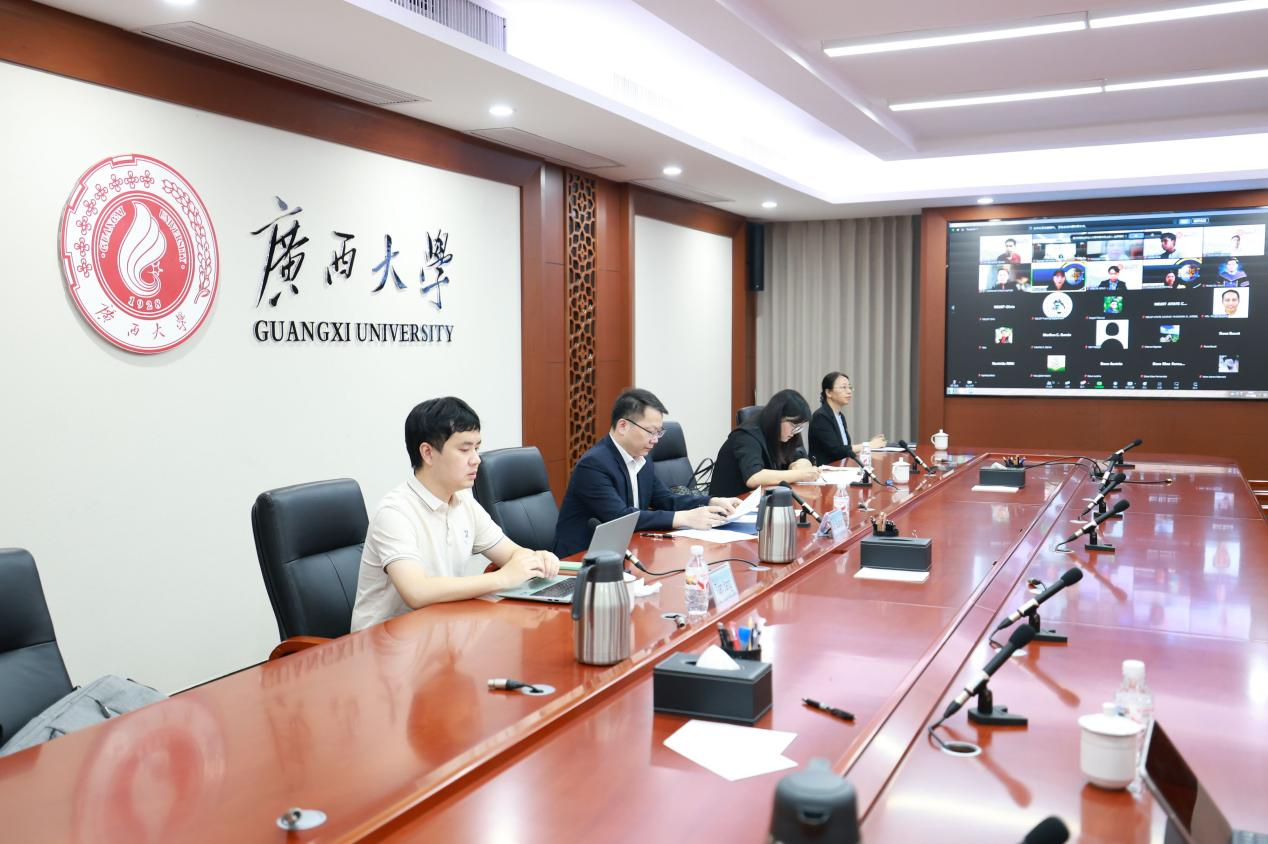
Zhao Shuangliang introduced the educational situation of GXU as well as the purpose and mission of the Alliance, and put forward several proposals for its sustained and healthy development. He emphasized the need to hold annual meetings on a rotating basis, with themes focused on sustainable development, educational innovation, and scientific and technological cooperation, so as to deepen exchanges and build consensus. He also proposed expanding the Alliance by inviting high-quality universities from ASEAN countries to join the six founding institutions, thereby creating a flagship inter-university cooperation alliance within the ASEAN region. In addition, he called for the refinement and implementation of cooperation mechanisms through the prompt signing of alliance agreements, the promotion of faculty and student exchanges, credit transfer and recognition, joint degree programs, and the establishment of shared research laboratories for collaborative research projects. Furthermore, he advocated working together to advance the application of artificial intelligence in university governance, encouraging member institutions to share digital management experience, jointly develop AI-powered teaching systems, virtual simulation platforms, and academic integrity systems, and collectively drive the digital and intelligent transformation of universities within the Alliance.
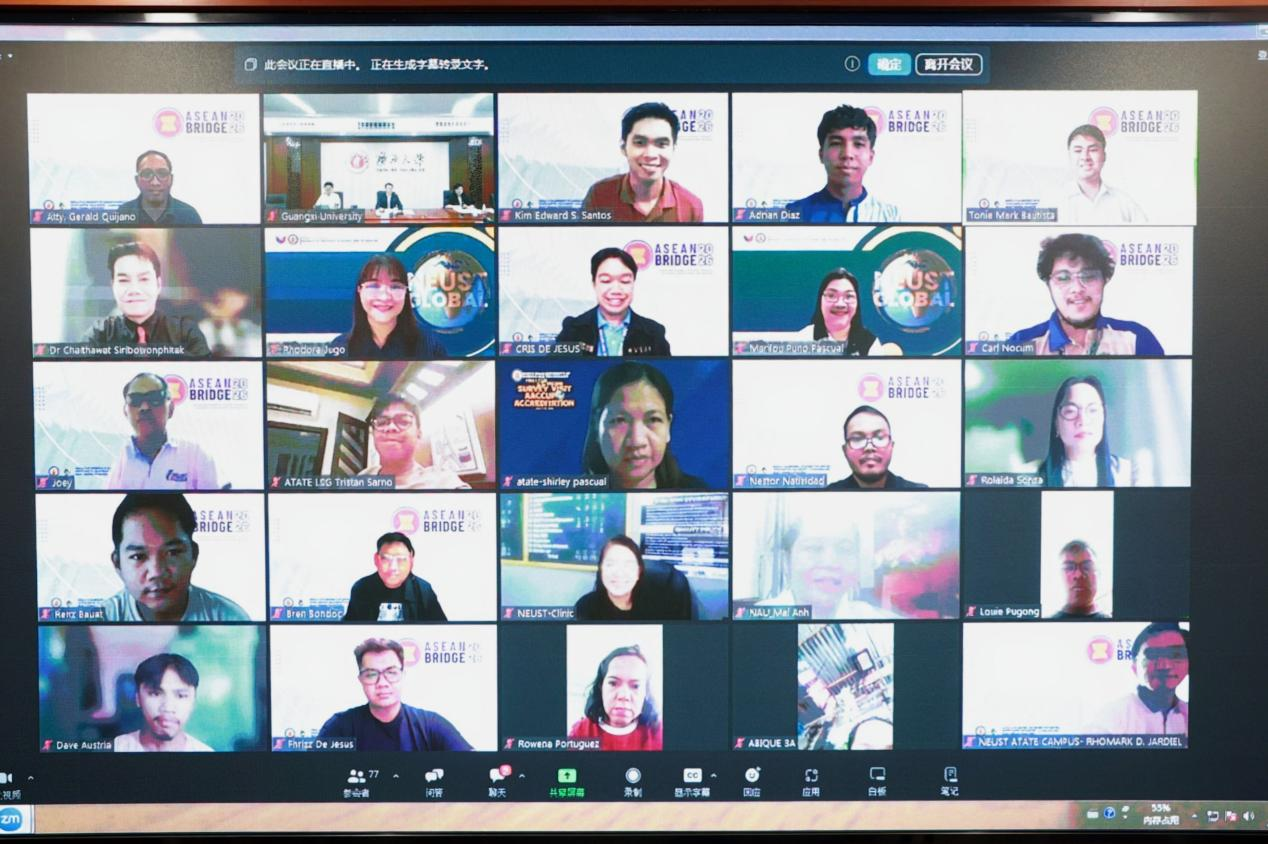
At the meeting, representatives from GXU, Nghe An University in Vietnam, Udon Thani Rajabhat University in Thailand, Mahasarakham Rajabhat University in Thailand, Nueva Ecija University of Science and Technology in the Philippines, and Pangasinan State University in the Philippines spoke successively and discussed the development of the Alliance. Tian Yang, an associate professor from the School of Computer and Electronic Information at GXU, was also invited to attend as a domain expert and delivered a keynote report.
The convening of this seminar coincides with the year of deepening the China-ASEAN Comprehensive Strategic Partnership; as the chair unit of the Alliance, GXU successfully built an "ASEAN Bridge" connecting Vietnam, Thailand, the Philippines, and other countries. The meeting established a new cooperation paradigm with AI-empowered Education 3.0 as the core, and through promoting scientific research synergy and digital development, effectively translated sustainable development into practical actions for regional higher education goals.
The Alliance was established on May 16, 2026, jointly initiated by six universities including Guangxi University, Vietnam's Nghe An University, Thailand's Udon Thani Rajabhat University, Thailand's Maha Sarakham Rajabhat University, the Philippines' Nueva Ecija University of Science and Technology, and the Philippines' Pangasinan State University, in Vinh City, Vietnam, with GXU serving as the chair unit. The Alliance pools the strength of universities from China, Vietnam, Thailand, and the Philippines, representing another significant international cooperation platform established by our university in the ASEAN region. With advancing academic internationalization, conducting high-level scientific research, serving local development, and building a regional education brand as its four major development directions, the Alliance is committed to building a vibrant education and research community in Southeast Asia. The Alliance aligns itself with international accreditation standards such as the ASEAN University Network Quality Assurance (AUN-QA) and the Accreditation Board for Engineering and Technology (ABET), striving to increase the quantity of high-quality research indexed in the Web of Science (WoS) and Scopus, promoting the transformation of research achievements into practical solutions for local development, and comprehensively enhancing the international influence of member institutions.

 Home
>
News & Events
>
News
Home
>
News & Events
>
News


