Recently, a research team led by Professor Xiao Jianzhuang at GXU collaborated with leading scholars worldwide to comprehensively review the current technical status, challenges, and future directions of Recycled Aggregate Concrete (RAC). Notable collaborators included Xiao Xuwen, Academician of the Chinese Academy of Engineering and Professor at Tongji University; Liu Jiaping, Academician of the Chinese Academy of Engineering and Professor at Southeast University; Surendra P. Shah, an academician of three countries (the United States, China and India) and professor; Jorge de Brito, Professor at the University of Lisbon, Portugal; and Poon Chi Sun, Professor at the Hong Kong Polytechnic University, among other experts. The study, titled “Recycled aggregate concrete design, application and challenges,” was published in Nature Reviews Clean Technology—an authoritative international journal and a subsidiary journal of the Nature portfolio.
Aggregates account for as much as 60—75% of the volume of concrete. Driven by this demand, the global annual extraction of natural sand and gravel reaches approximately 50 billion tons, which has triggered severe environmental problems such as riverbed degradation and loss of biodiversity. Meanwhile, a significant portion of waste concrete from construction and demolition waste (CDW) is disposed of in landfills, which not only results in resource wastage but also exacerbates land occupation and environmental pollution. Against this backdrop, converting waste concrete into recycled aggregate (RA) for producing recycled aggregate concrete (RAC) is regarded as a key approach to alleviating resource pressure and environmental pollution. Nevertheless, despite decades of technological development, the large-scale application of RAC still faces systemic barriers related to technical performance, policy frameworks, market mechanisms, and public perception.
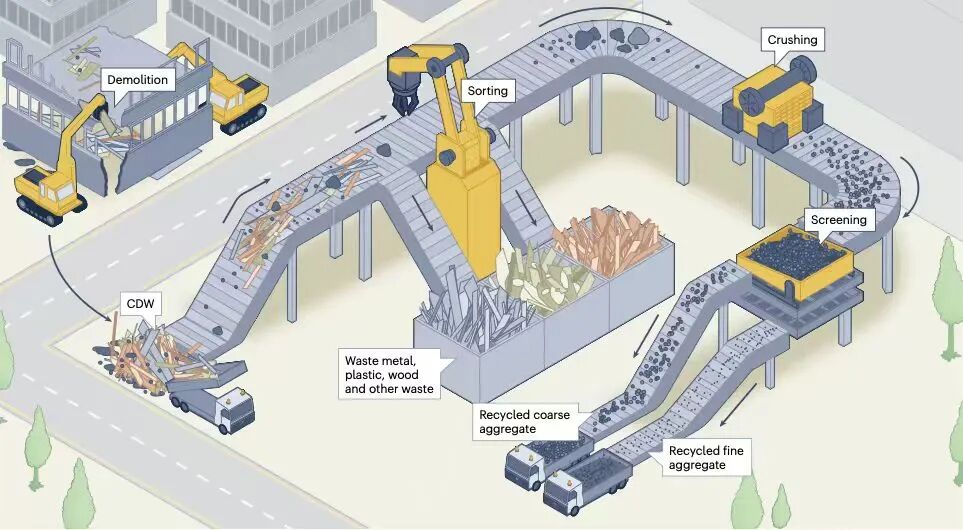
Fig. 1. Typical Production Process of Recycled Aggregate
The study systematically elaborates on the production process (Fig. 1), performance characteristics and current status of engineering applications of RAC, analyzes the obstacles to its widespread adoption, and proposes corresponding development pathways. To date, RAC has been verified in a number of engineering practices and widely applied in the fields of architecture and infrastructure, demonstrating its potential to replace natural aggregate concrete (NAC). Research on RA enhancement, RAC mix proportion design, structural safety and durability has laid a technical foundation for its engineering application. However, further promotion of RAC remains constrained by non-technical barriers, including lack of standardized systems, insufficient policy support, imperfect market mechanisms, and lagging public perception. To this end, the study recommends establishing a standardized framework, enhancing policy support, fostering market mechanisms, and strengthening public outreach to drive the construction industry’s transition from a NAConstruction-based linear model to a RAConstruction-based circular model (Fig. 2).
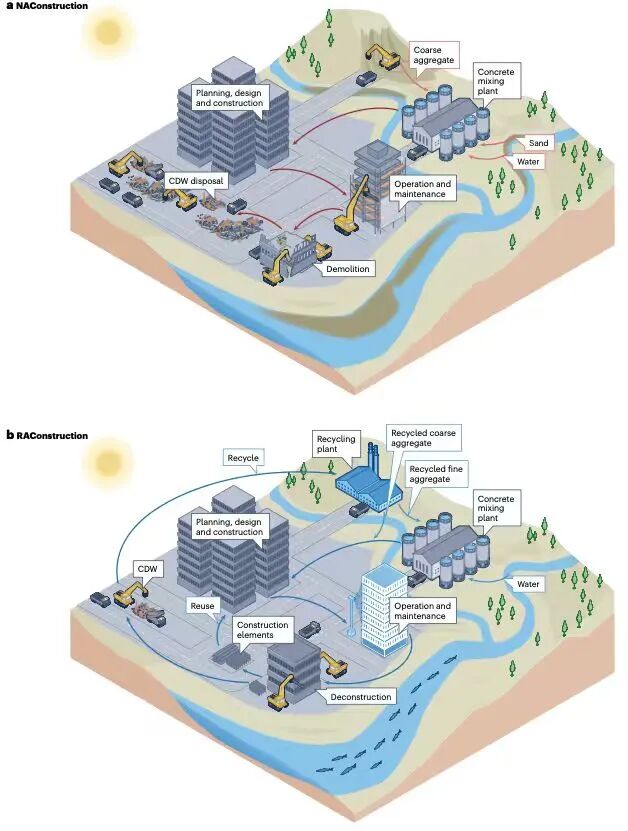
Fig. 2. Schematic Diagram of NAConstruction and RAConstruction.
It is reported that Nature Reviews Clean Technology is an authoritative review journal under the Nature portfolio, focusing on the field of clean technology. It covers basic research, technological development, large-scale application, and their impacts on the economy, environment and society.

 Address: No.100,East Daxue Road,Xixiangtang District,Nanning, Guangxi,China
 Postal Code: 530004
 Tel: 86-771-3238863
 Email: gjc@gxu.edu.cn