Recently, a research team from the College of Forestry of GXU has achieved new progress in the field of plant adaptive evolution. A paper titled Convergent evolution of cell size enables adaptation to the mangrove habitat, jointly completed by a team led by Professor Jiang Guofeng from the College of Forestry and international collaborators, has been published in the international journal Current Biology. Guangxi University is listed as the primary completion unit.
Mangrove plants are a unique plant community growing in the intertidal zones of tropical and subtropical coastlines, possessing extremely high ecological and economic value. How mangroves adapt to extreme environments such as high salinity, waterlogging, and strong winds has long been a focus in plant physiological ecology and evolutionary research. This study systematically reveals, for the first time from the perspective of cell biomechanics, the cellular evolutionary mechanisms by which mangrove plants adapt to high-salt environments. It demonstrates that convergent evolution in cell size facilitates salt tolerance in mangroves, providing new insights for the breeding of salt-tolerant crops.
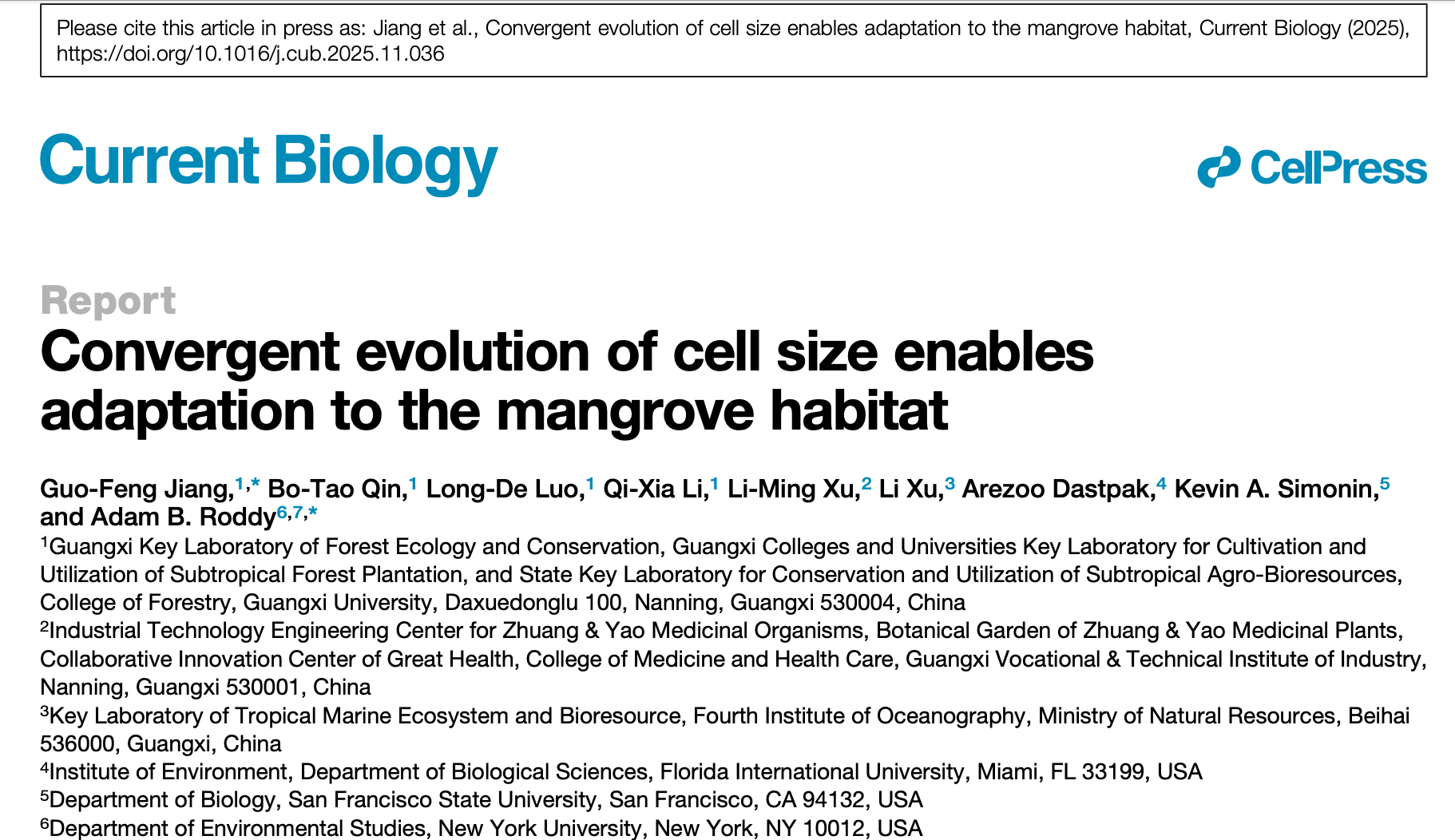
The team, in collaboration with researchers from institutions including New York University, Florida International University, and San Francisco State University, conducted a systematic comparison of leaf cell structures across 34 mangrove species and 33 related inland species. They found that mangrove plants have evolved nearly 30 times over the past approximately 200 million years, consistently and convergently evolving smaller epidermal cells and thicker cell walls. This trait is independent of genome size and represents a convergent adaptive characteristic formed through multiple independent evolutionary events.
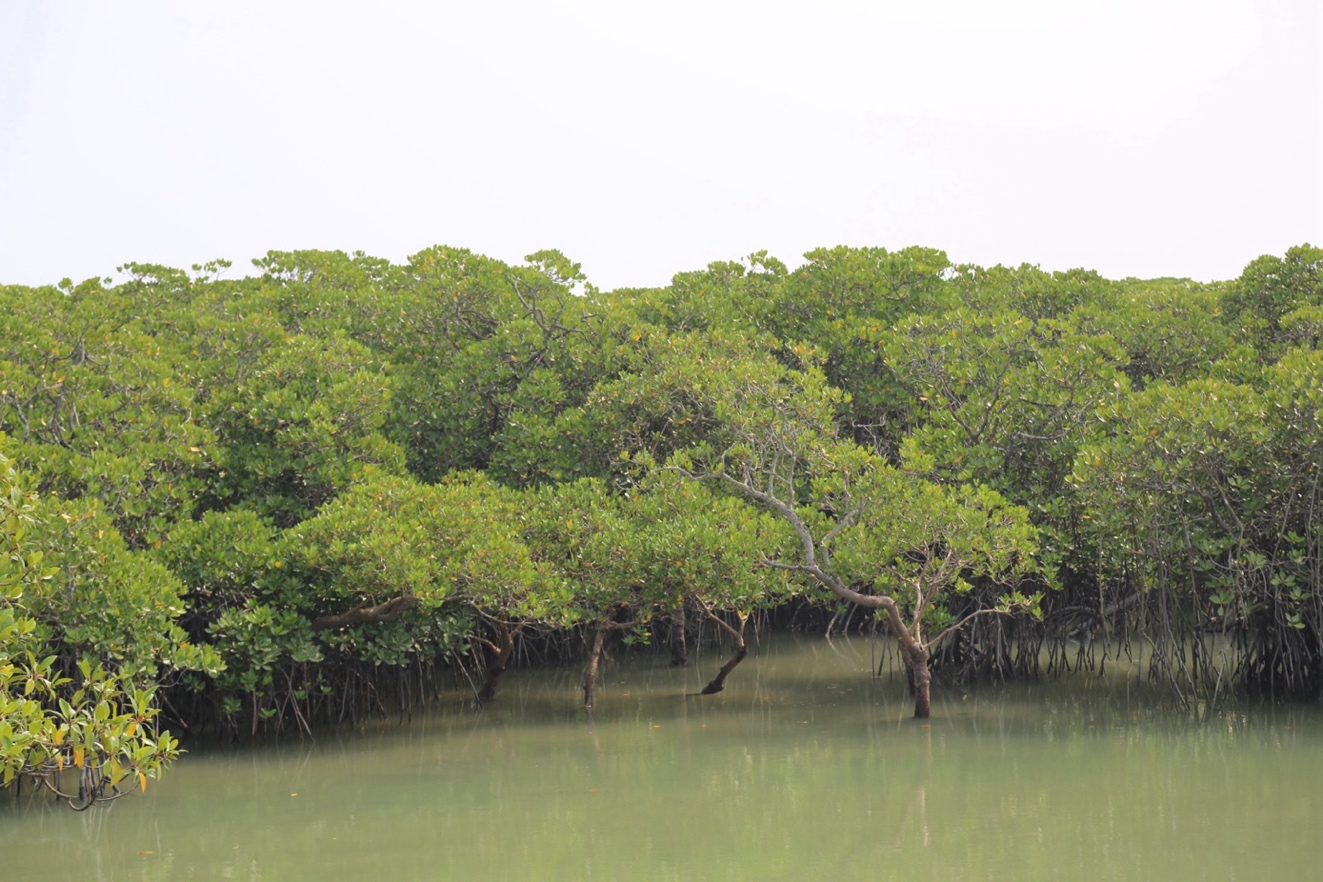
The study indicates that high-salt environments cause physiological drought in plants, subjecting cells to extremely high osmotic pressure. Smaller cells and thicker cell walls significantly enhance cellular mechanical strength, helping cells maintain high turgor pressure to resist salt stress and prevent wilting. This finding challenges the traditional view that plant salt tolerance primarily relies on physiological regulation (such as salt exclusion or secretion), offering a new perspective for understanding plant environmental adaptation from the angle of cellular structural adaptation. Furthermore, the study found that the stomatal size and density of mangrove plants did not change significantly under environmental pressure, suggesting that evolutionary selection primarily acts on cellular mechanical strength rather than gas exchange efficiency (photosynthetic efficiency). This conclusion provides a theoretical basis for further breeding salt-tolerant crops by regulating cell morphology and cell wall characteristics. The research not only deepens the understanding of mangrove adaptation mechanisms but also opens possibilities for using cellular engineering approaches to enhance crop salt tolerance in the future. Especially against the backdrop of global climate change and increasing soil salinization, the related findings hold significant application prospects.
This research was supported by the National Natural Science Foundation of China and key projects of the Guangxi Natural Science Foundation.

 Address: No.100,East Daxue Road,Xixiangtang District,Nanning, Guangxi,China
 Postal Code: 530004
 Tel: 86-771-3238863
 Email: gjc@gxu.edu.cn