On December 19, the 2025 Annual Conference of the China-ASEAN Education-Industry Alliance of Agriculture and Forestry, hosted by Guangxi University, was held in Nanning. He Zuhua, an academician of the Chinese Academy of Sciences, attended and delivered a keynote report. Addressing the conference were Xiao Jianzhuang, President of Guangxi University; Zhang Yuanliang, Deputy Director of the Education Department of the Guangxi Zhuang Autonomous Region; Weng Liping, Second-Level Inspector of the Department of Agriculture and Rural Affairs; and Jiang Guixiong, Second-Level Inspector of the Forestry Department. Also in attendance were Mr. SONG SOKSAN, Deputy Director of the Department of Higher Education Management, Ministry of Education, Youth and Sports of Cambodia; Ngy Laymithuna, President of Kampong Cham University, Cambodia; Weerapon Thongma, President of Maejo University, Thailand; and Khamhoung Chanthavong, Director of the Confucius Institute at the National University of Laos. Zhao Shuangliang, Council Chair of the Alliance and Vice President of Guangxi University, presented the annual work report to the assembly.
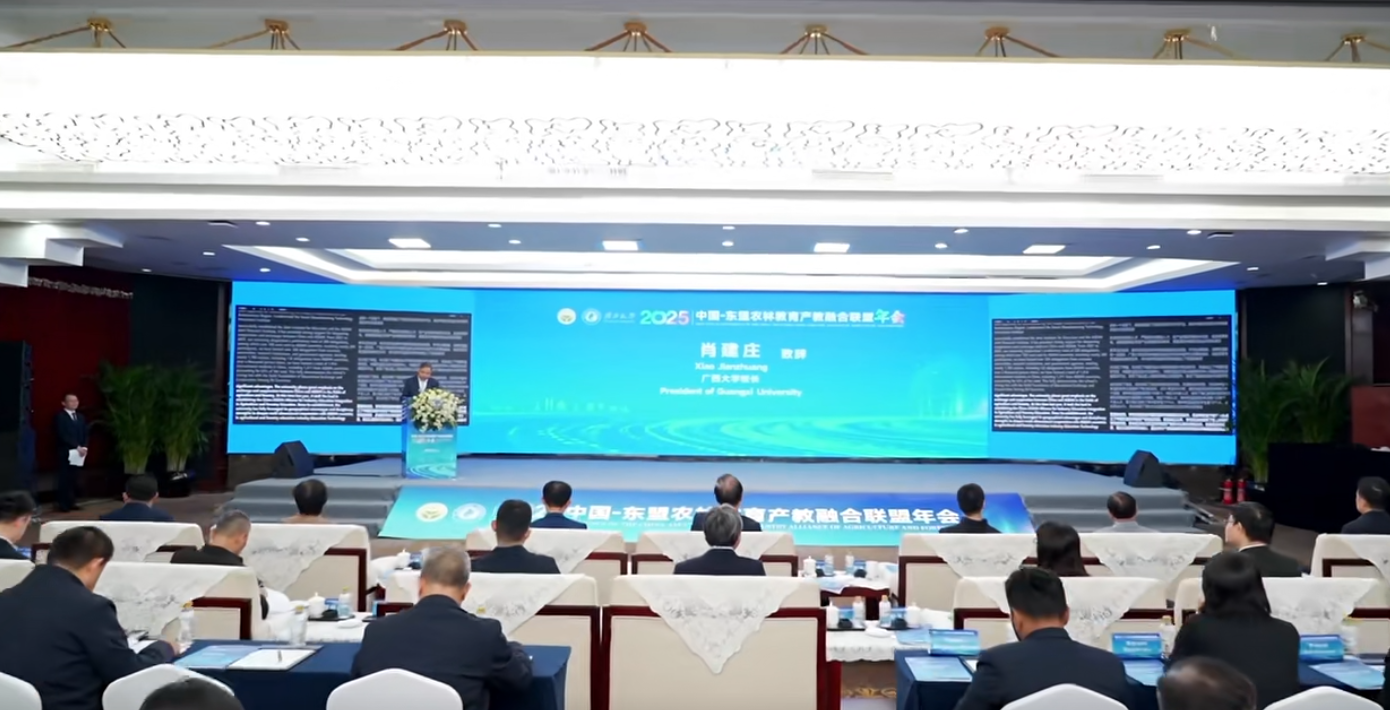
Xiao Jianzhuang noted that as the global agriculture and forestry industry is transitioning towards quality, efficiency, and sustainable development, the cooperation potential between China and ASEAN is strong. Leveraging its geographical and disciplinary strengths, Guangxi University vigorously advances talent cultivation and scientific research cooperation oriented towards ASEAN through resource sharing, platform co-building, and technology export. Moving forward, the university will further focus on educational coordination, scientific and technological collaboration, and institutional development to promote efficient resource circulation, accelerate the sharing and transformation of academic achievements, and facilitate the conversion of university research resources into industrial innovation drivers. This aims to establish a benchmark for transnational talent cultivation and technological innovation, injecting new momentum into the joint construction of a China-ASEAN community with a shared future in the fields of agriculture and forestry.
Zhang Yuanliang emphasized that Guangxi, as a frontline for opening up and cooperation with ASEAN, is leveraging its geographical advantages to build a key hub in the dual circulation system. He expressed hope that the Alliance would uphold moral education, deepen the collaborative innovation mechanism, strengthen open cooperation, consolidate the foundation of industry-education integration, further build consensus and deepen cooperation, making the Alliance a benchmark for the coordinated development of regional agriculture and forestry universities nationwide and a model for China-ASEAN educational exchange and cooperation. This would contribute significantly to advancing agricultural and rural modernization and building China into an agricultural powerhouse.
Weng Liping stated that Guangxi is accelerating the construction of the "10+3+N" modern characteristic agricultural industry system and fully promoting comprehensive rural revitalization and the building of a strong agricultural region. The Alliance serves as a crucial platform for gathering educational, scientific research, and industrial resources, and an effective vehicle for deepening regional cooperation and serving industrial upgrading. She hoped the Alliance would continue to deepen cooperation with ASEAN, strengthen collaborative talent cultivation, improve operational mechanisms, and contribute to the upgrading of regional agriculture and forestry industries and the broader national strategy for agricultural foreign cooperation.
Jiang Guixiong indicated that the transformation and upgrading of the forestry sector fundamentally relies on scientific and technological innovation, hinges on talent support, and is centered on industry-education integration. He expressed hope that the Alliance would persistently deepen educational cooperation, solidify the talent foundation, empower through technology, expand the scope of cooperation, and extend collaboration from education and research to industrial integration and market sharing. This would help Guangxi build a highland for China-ASEAN cooperation in agriculture and forestry and contribute to serving the Belt and Road Initiative.
Zhao Shuangliang said that upholding an open and cooperative philosophy, the Alliance has achieved fruitful results in curriculum sharing, cross-border talent cultivation, industry-education integration, platform construction, and technological services. In the future, the Alliance will upgrade its governance mechanisms, deepen the joint cultivation of internationalized talents, upgrade industry-education integration platforms, promote the overseas outreach of education, technology, and culture, and empower the development of regional agriculture and forestry industries.
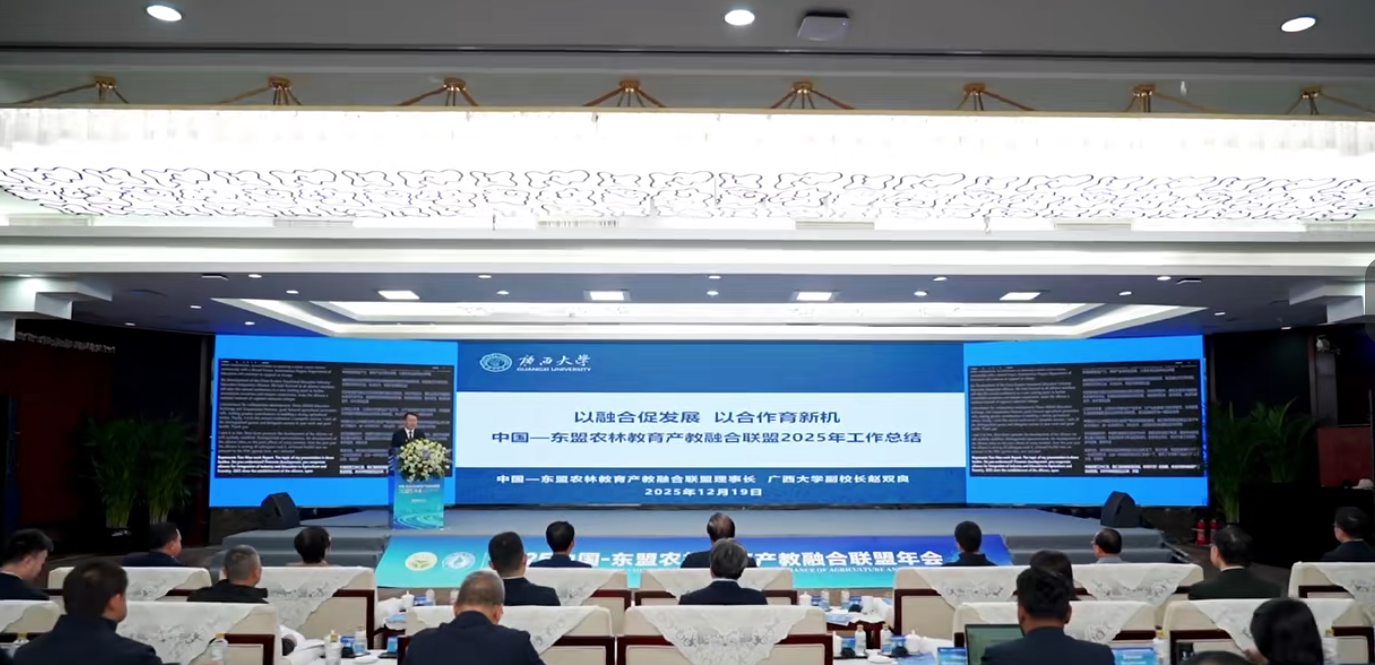
Focusing on the theme "Smart Agriculture and Green Transformation," participating scholars exchanged views on topics including digital empowerment, green efficiency enhancement, high-quality development of agriculture and forestry, and regional coordination. They jointly explored new ideas, measures, and pathways for the integrated development of agriculture and forestry education and industry. A teaching achievements exhibition was also held during the conference.
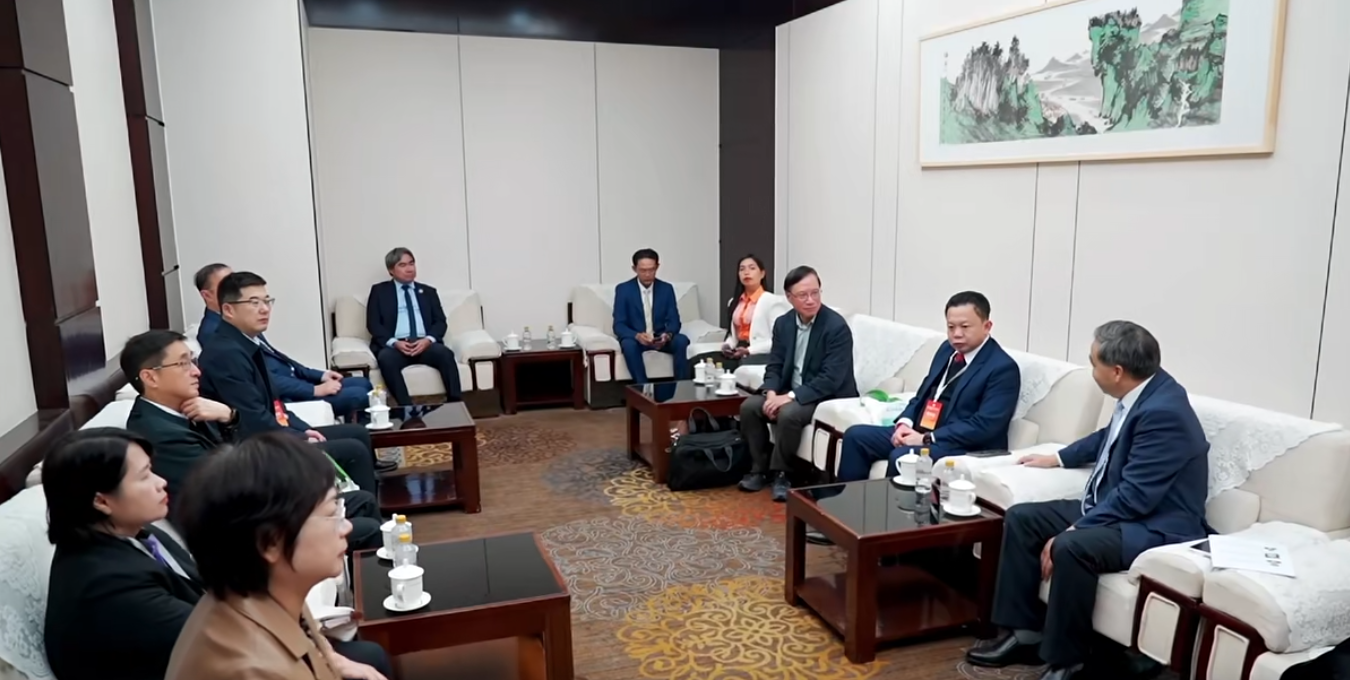
It was reported that the China-ASEAN Education-Industry Alliance of Agriculture and Forestry was established in December 2024, with 40 inaugural member institutions including universities, research institutions, and enterprises from ASEAN countries and China. In 2025, it has welcomed five reputable institutions as new members. Adhering to the principles of "openness, cooperation, sharing, and mutual benefit," and aligned with the initiatives of jointly building the Belt and Road and "forging an even closer China-ASEAN community with a shared future," the Alliance focuses on the development of modern agriculture and forestry in tropical and subtropical regions. It facilitates all-round cooperation among China-ASEAN agricultural universities, as well as between universities and agriculture and forestry research institutes and enterprises. The Alliance aims to promote the deep integration and efficient sharing of agriculture and forestry education and industrial resources between China and ASEAN countries, collaboratively cultivate innovative talents for the new era who are agriculture-loving and agriculturally literate, jointly promote the educational development of member institutions, and contribute to rural revitalization in China and ASEAN countries.
The event was attended by over 200 representatives from agricultural universities, research institutions, and industry enterprises from ASEAN countries and China.

 Home
>
News & Events
>
News
Home
>
News & Events
>
News


